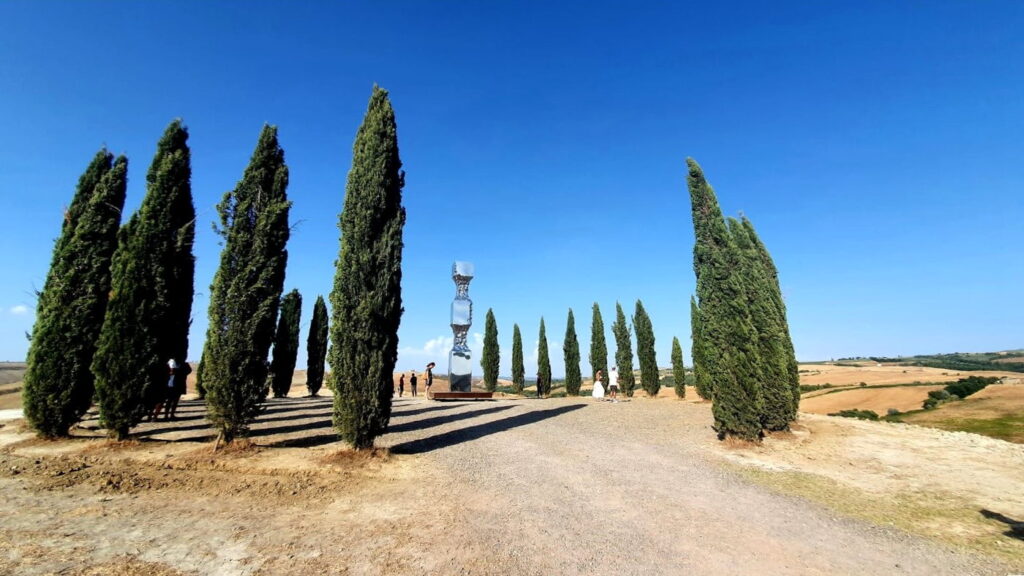
Val d’Orcia is one of those places that never stops surprising me. I grew up nearby, and I have been coming here since I was a child. Even now, every time I drive through these hills, I find a reason to slow down and look around.
When I think of Val d’Orcia, I do not think only of its famous postcard views. I think of walks through the fields, afternoons in the squares of Bagno Vignoni and San Quirico, and roads that still make me want to stop the car after all these years.
Many visitors try to fit five or six towns into a single day. I understand why, but I think this is the easiest way to miss what makes the area special. The villages are small and you can often see their main sights in one or two hours. The real pleasure lies in taking an unhurried walk, sitting in a square or stopping when the landscape catches your eye.
If I were showing Val d’Orcia to a friend for the first time, these are the places I would choose and the route I would suggest.
Written by Sara, who grew up near Val d’Orcia and has explored its villages, roads and thermal springs since childhood.
Val d’Orcia at a glance
- Where it is: southern Tuscany, south of Siena and close to Mount Amiata
- Best way to get around: by car
- How long to stay: two days is ideal for a first visit; one day works if you choose only a few stops
- Best time to visit: spring for green hills and mild weather; early summer for golden fields
- Good bases: Pienza, San Quirico d’Orcia and Bagno Vignoni
- Known for: rolling hills, cypress-lined roads, medieval villages, thermal springs and pecorino cheese
The Val d’Orcia landscape has been a UNESCO World Heritage Site since 2004. It is the part of Tuscany many travelers picture before they arrive: gentle hills, isolated farmhouses, cypress trees and stone villages. But it is a wide rural area, not a single town, so planning your route matters.
Do you need a car in Val d’Orcia?
For most visitors, yes. A car is not simply useful here; it is what allows you to experience the area properly.
There is no direct train service into Val d’Orcia. The nearest useful stations include Chiusi–Chianciano Terme, Buonconvento and Siena, but public transport between the villages is limited and is not designed for a relaxed sightseeing itinerary. A car also lets you stop along the scenic roads, reach places such as the Chapel of Vitaleta and travel between the hot springs and hill towns without building your day around bus timetables.
This article contains affiliate links. If you make a booking through one of these links, I may earn a small commission at no extra cost to you.
A rental car is the most practical way to travel between the villages, reach countryside accommodations and stop along the scenic roads at your own pace → Compare car rental prices
If you do not want to drive in Italy, I would choose an organized day tour from Siena, Florence or Rome instead of trying to visit several villages independently by public transport.
One practical point: the historic centers often have restricted traffic zones, known in Italy as ZTLs. Leave the car in the marked parking areas outside the old town and continue on foot.
The best places to visit in Val d’Orcia
Bagno Vignoni: the place I always show friends first
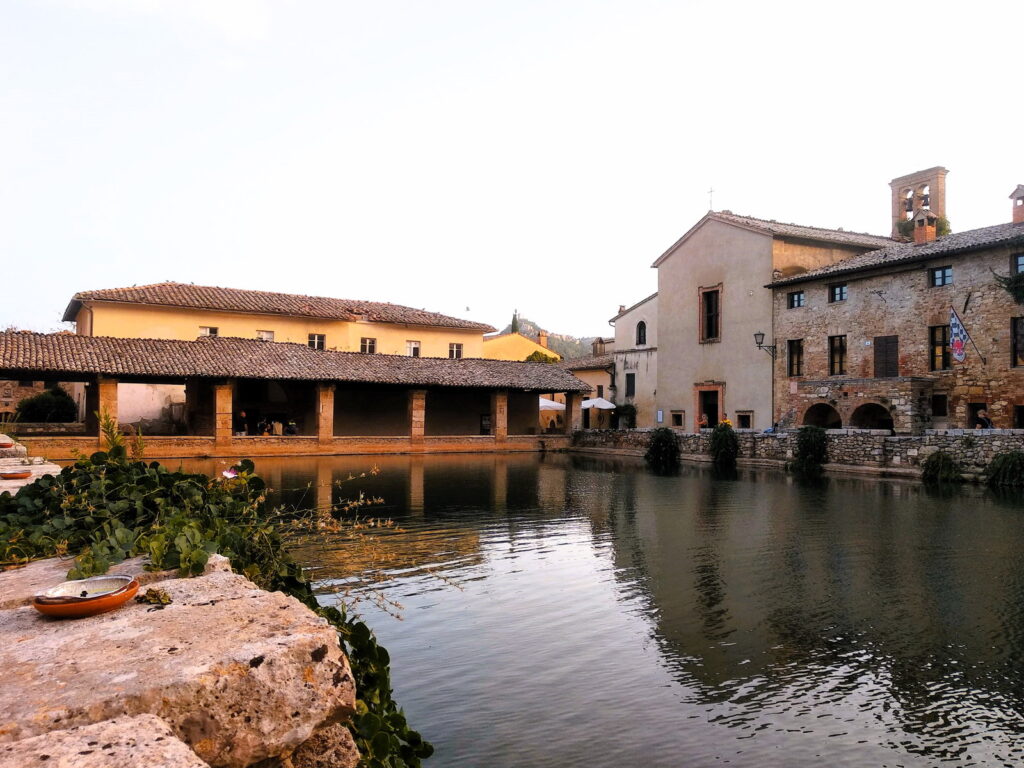
If I had to choose one place that captures the spirit of Val d’Orcia, it would be Bagno Vignoni. It is where I take friends when they visit the area for the first time.
It is not the largest village and it does not have a long list of monuments. What makes it unforgettable is its main square: instead of a paved piazza, there is a large Renaissance pool filled with thermal water from springs that have flowed here for centuries.
Do not stop after walking around the square. Follow the path down to the Parco dei Mulini, where you can see the old channels once used to carry the thermal water to the mills and enjoy an open view across the valley.
Below the village there are also free natural thermal pools. They are not a spa: the bottom can be slippery, the water is not always crystal clear and the setting is quite rustic. Still, bathing outdoors among the Tuscan hills is an experience worth trying at least once.
If your time is limited, Bagno Vignoni is one of the stops I would never remove from the itinerary.
How long to allow: around 1–2 hours, longer if you want to try the natural pools.
The Chapel of Vitaleta: an iconic view that has changed over time
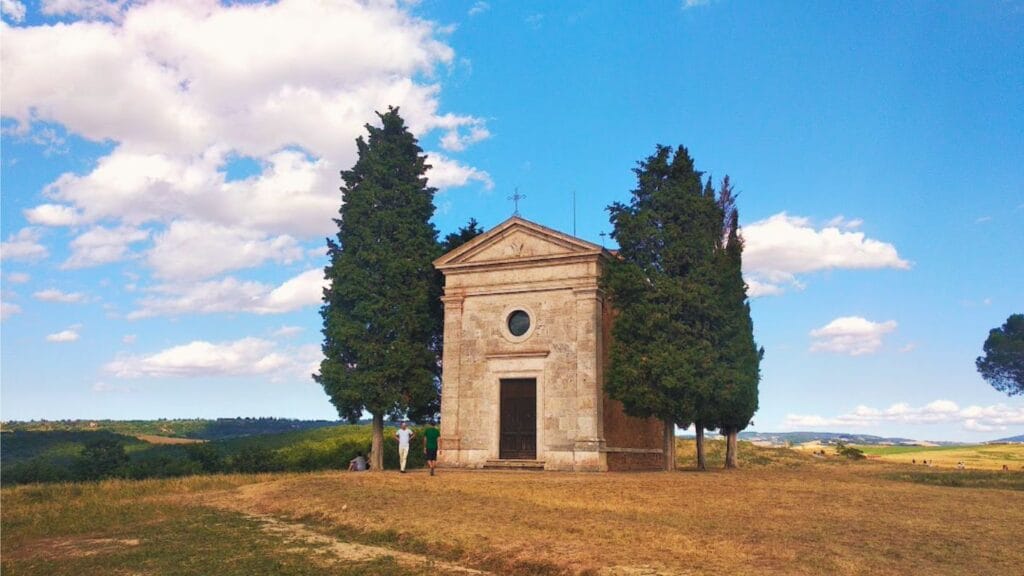
The small Chapel of the Madonna di Vitaleta, standing alone between fields and cypress trees, is one of the most photographed sights in Tuscany.
You leave the car and continue on foot through the countryside. The walk is part of the experience: this is where you find the open hills and long views that have made Val d’Orcia famous around the world.
For me, Vitaleta is also connected to personal memories. Years ago, my friends and I would sit on a blanket in the grass, talk and enjoy the view. It was a simple place that local people experienced very naturally.
The chapel has since been restored and the surrounding area has become more polished and exclusive. It is no longer possible to use the space with the same freedom, and the atmosphere has inevitably changed. I am glad such a beautiful place has been restored, but those of us who knew it before can feel the difference.
I still recommend it to first-time visitors. Walk a little beyond the busiest viewpoints and you can still find the silence, fields and landscape that make this area special.
How long to allow: about 45–60 minutes, including the walk.
Pienza: Renaissance streets and wide valley views
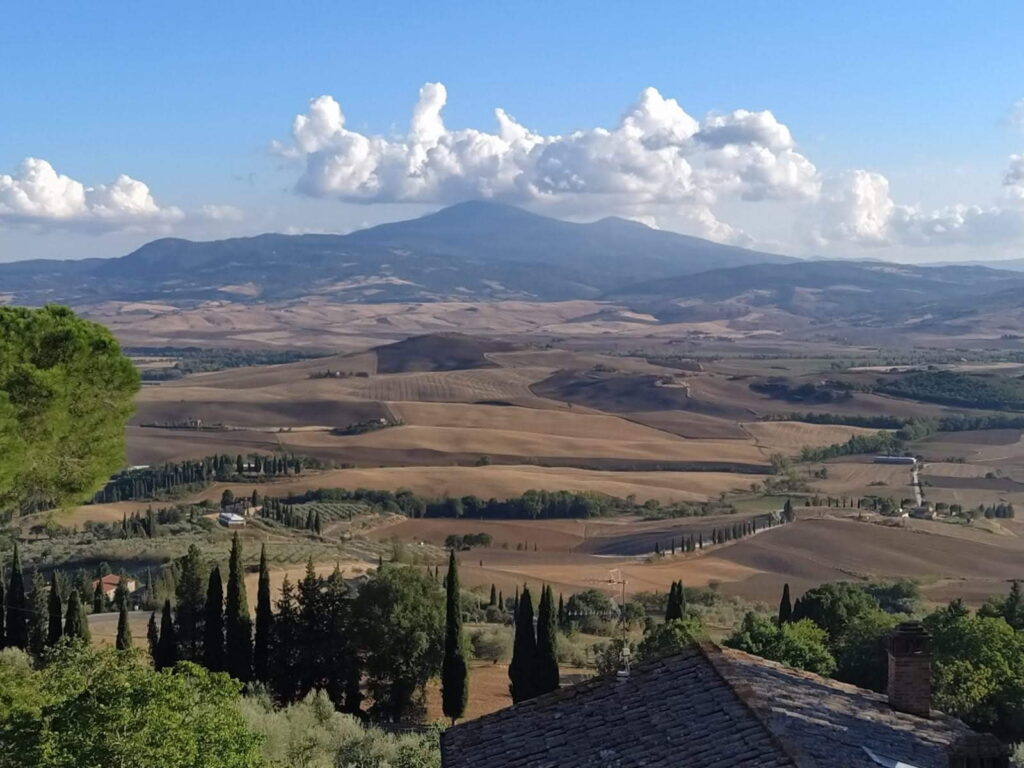
Pienza is almost impossible to leave out of a first Val d’Orcia itinerary.
Pope Pius II transformed his birthplace into an ideal Renaissance town in the 15th century, and the historic center is still remarkably harmonious. It is compact and easy to explore on foot, but the views often make the walk take longer than expected.
Start in Piazza Pio II, then wander along the small streets behind the cathedral. Some have romantic names such as Via dell’Amore and Via del Bacio, but what I enjoy most is the panoramic walkway overlooking the valley and Mount Amiata.
Pienza is also known for pecorino, the local sheep’s-milk cheese. You will see it in many shop windows, ranging from young and mild to aged and more intense. This is a good place to stop for lunch or buy something for a picnic.
How long to allow: around 2 hours, or half a day with lunch.
San Quirico d’Orcia: the village I return to most often

San Quirico is one of the places I have come to appreciate more and more over the years. It is less immediately famous than Pienza, but perhaps for that reason it feels calmer and more lived-in.
The historic center is compact and beautifully kept, with stone lanes, elegant little squares and corners that are best discovered without a strict plan. The Horti Leonini, a formal Italian garden inside the village, are worth a short visit and offer welcome shade on a hot day.
You can see San Quirico comfortably in a couple of hours. Its appeal is not a single major attraction, but the pleasure of walking slowly and watching everyday life unfold in the streets and squares.
For me, it remains one of the most enjoyable villages in the whole area.
How long to allow: around 1–2 hours.
Montepulciano: a beautiful nearby town worth adding
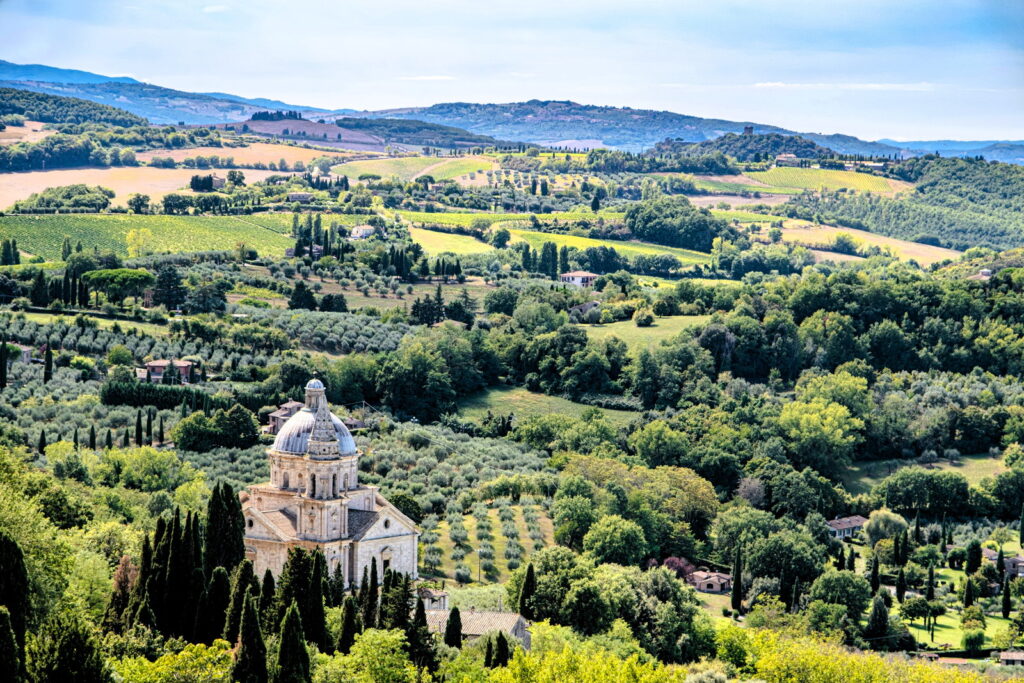
Montepulciano is often associated with Val di Chiana rather than the core of Val d’Orcia, but I nearly always recommend including it in a trip through this part of Tuscany.
The town rises steeply along a hill, and reaching Piazza Grande means walking uphill through Renaissance buildings, wine shops and stone streets. The reward is one of the most impressive squares in southern Tuscany.
I have a personal connection with Montepulciano: I attended high school when it was still housed inside the Fortezza. Whenever I return, I still walk up to the fortress. It occupies the highest part of the town and remains one of my favorite viewpoints, not only for the landscape but also for the memories attached to it.
Before leaving, stop at the Church of San Biagio, just outside the historic center. Its pale stone, balanced Renaissance architecture and setting below the town make it one of the area’s most striking churches.
How long to allow: at least 2–3 hours. Wear comfortable shoes because the streets are steep.
Bagni San Filippo: natural hot springs in the woods
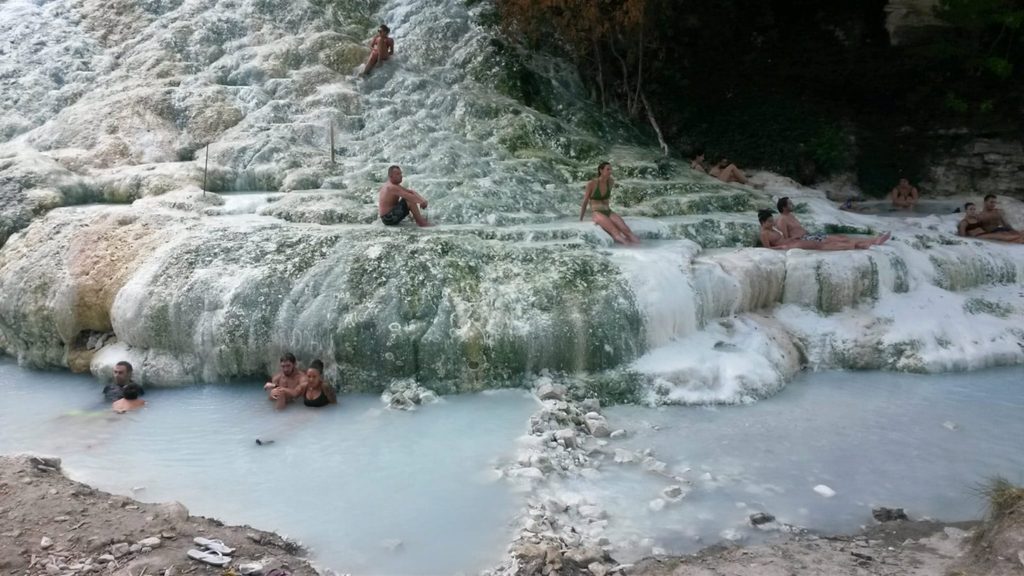
Bagni San Filippo feels very different from the open countryside and hill towns around it. Here you follow a woodland path beside warm streams and pale limestone formations created by the thermal water.
The best-known formation is the Balena Bianca, or White Whale, a huge white deposit of calcium carbonate surrounded by the woods. If the season and conditions are suitable, allow enough time for a soak in the natural pools.
This is not a quick photographic stop. I would set aside at least a few hours, wear shoes with good grip and bring everything you need for changing, as the natural area has no spa-style facilities.
For more practical information, see my complete guide to Bagni San Filippo hot springs.
How long to allow: 2–3 hours.
A realistic one-day Val d’Orcia itinerary
With only one day, I would not try to cover every famous town. My preferred route is:
- San Quirico d’Orcia – begin with a walk through the historic center.
- Chapel of Vitaleta – stop for the countryside walk and views.
- Pienza – explore the town and have lunch.
- Bagno Vignoni – end the afternoon around the thermal square and Parco dei Mulini.
This order follows a sensible route through the central part of the valley and gives you a mix of villages, landscapes and thermal history. If you prefer an even slower day, skip San Quirico and keep only Vitaleta, Pienza and Bagno Vignoni.
I would not add Montepulciano or Bagni San Filippo to this same day. Both deserve more time, and you would spend too much of the visit checking the clock.
A two-day Val d’Orcia itinerary
Two days give you enough time to see the main places without turning the trip into a race.
Day 1: San Quirico, Vitaleta and Pienza
Start in San Quirico d’Orcia, when the streets are still quiet. After walking through the center and the Horti Leonini, drive toward the Chapel of Vitaleta and take time for the walk through the fields.
Continue to Pienza for lunch and spend the afternoon exploring its streets and viewpoints. If you have energy left, enjoy the scenic drive toward Monticchiello rather than adding another full village visit.
Stay in or near Pienza, San Quirico or Bagno Vignoni. An agriturismo in the countryside makes the landscape part of the trip, not just something you see between stops.
Day 2: Bagno Vignoni and Bagni San Filippo
Begin in Bagno Vignoni and walk down to the Parco dei Mulini before the village becomes busier. Then drive south to Bagni San Filippo, where you can spend a few hours along the thermal stream and near the Balena Bianca.
If thermal springs are not your priority, use the second half of the day for Montepulciano instead. I would choose one or the other, not rush through both.
Scenic stops and roads in Val d’Orcia
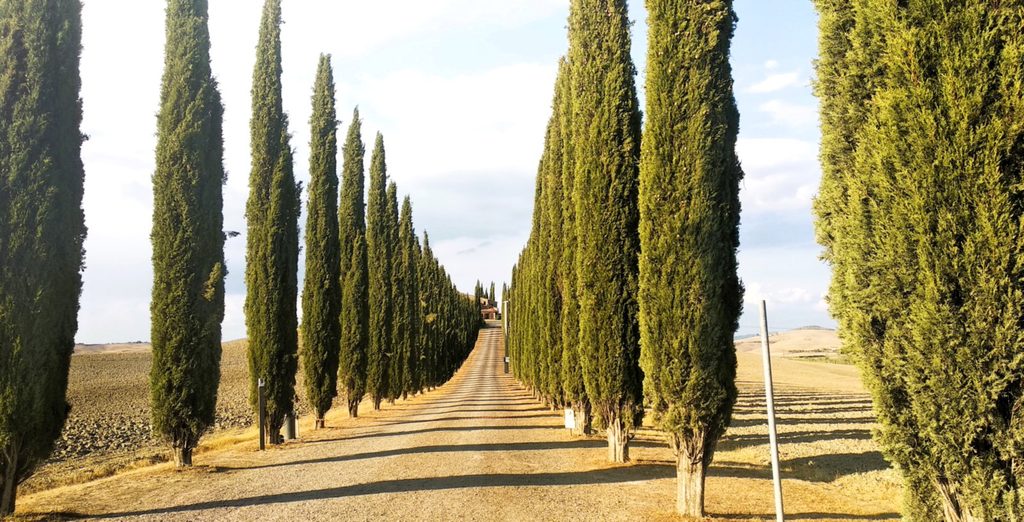
Some of the best moments in Val d’Orcia happen between the villages. The landscape changes with the light and the season, so leave room in your schedule for unplanned stops.
Three areas are especially worth looking out for:
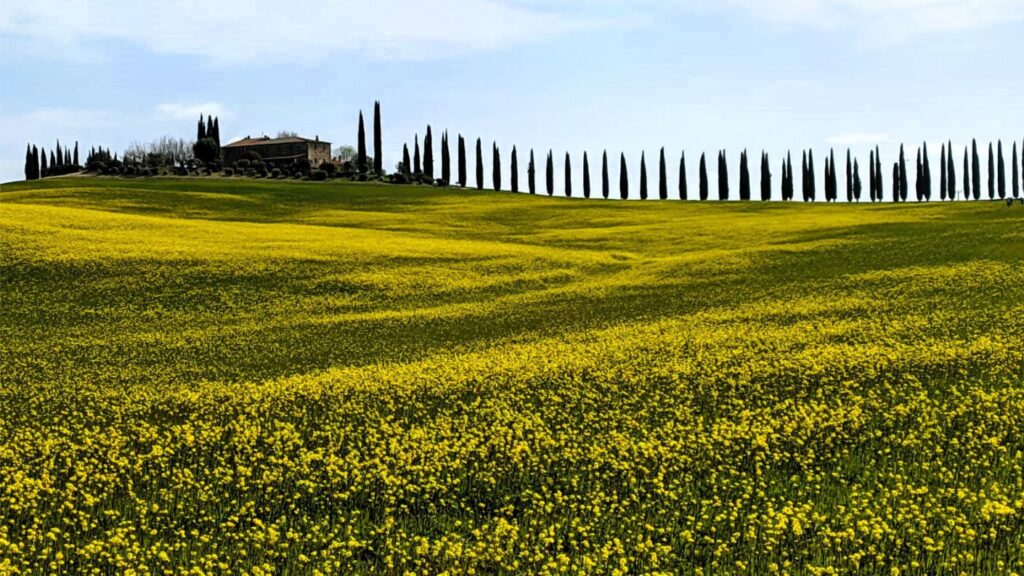
- Poggio Covili, known for the perfectly aligned cypress trees leading to the farmhouse;
- the roads between San Quirico d’Orcia and Pienza, with wide views across the hills;
- the countryside around Vitaleta, where the chapel appears between fields and cypress trees.
Only stop where you can pull off the road safely. Do not block farm entrances or walk into cultivated fields for a photograph. Many of the views people associate with Tuscany are part of working private properties.
How to reach Val d’Orcia from Rome, Florence and Siena
From Rome
Driving from Rome to the central Val d’Orcia area generally takes around 2–2.5 hours, depending on your destination and traffic. I have driven this route many times and it is practical for a weekend, but a same-day return makes for a long day. If possible, stay one or two nights.
The quickest route usually follows the A1 motorway toward the Chiusi–Chianciano Terme exit. A slower alternative through northern Lazio and along the Via Cassia can be scenic, depending on where you are headed.
From Florence
Allow roughly 1.5–2 hours by car. You can drive toward Siena and continue south on the Via Cassia, or use the A1 depending on your first stop. Val d’Orcia can be visited as a long day trip from Florence, but staying overnight gives you a much better sense of the area.
From Siena
Siena is the easiest city base for a day trip. San Quirico d’Orcia is roughly one hour away by car, depending on traffic and your route.
These times are only a planning guide. Always check live navigation before leaving, especially in summer and on weekends.
Where to stay in Val d’Orcia
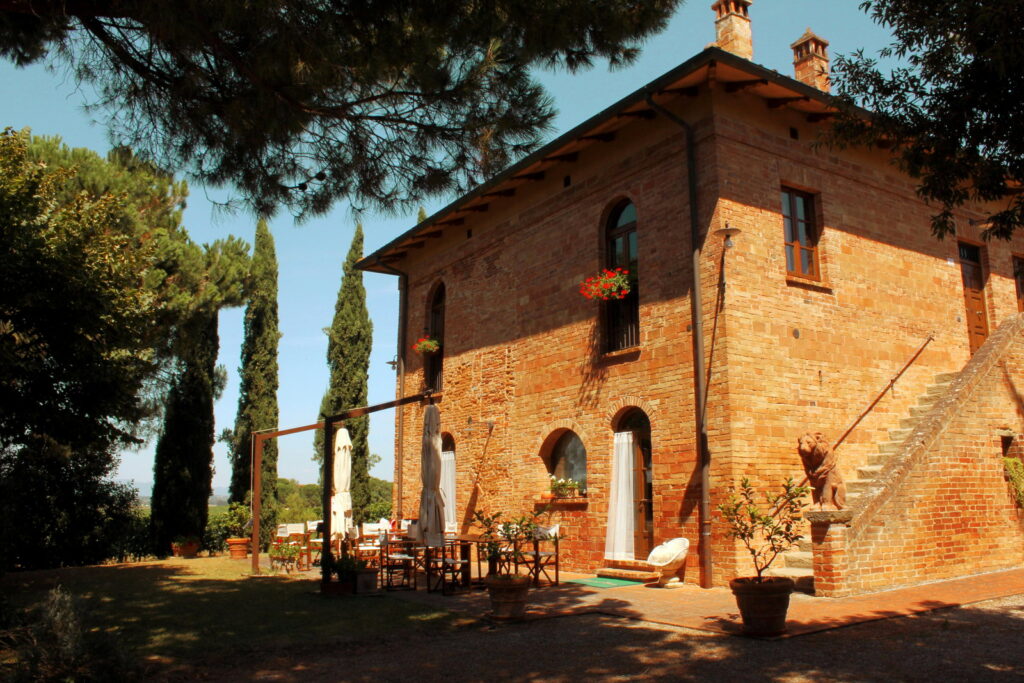
For a first visit, I would choose the accommodation for its atmosphere as well as its location. The main villages are close enough by car that waking up in the countryside can be worth a slightly longer drive.
An agriturismo is a working farm that offers guest accommodation. In Val d’Orcia, this may mean a room or apartment in a restored farmhouse, often surrounded by olive groves, vineyards or wheat fields. Some have a pool and a restaurant, while others are simpler rural stays.
- Pienza: best if you want restaurants, shops and an attractive town for an evening walk.
- San Quirico d’Orcia: central and convenient, with a quieter, more local atmosphere.
- Bagno Vignoni: ideal for a romantic or relaxing stay close to thermal spas.
- Countryside agriturismo: best for views and a slower experience, but a car is essential.
Personally, when I picture a stay in Val d’Orcia, I imagine a farmhouse among the hills. Having breakfast while looking over the fields or returning at sunset adds something that a quick day trip cannot offer.
Looking for a farmhouse or hotel in Val d’Orcia? → Check accommodation prices
Tours and experiences worth booking
If you do not want to drive, a guided tour is the simplest way to see several villages in one day. Wine tastings around Montepulciano or Montalcino can also make sense if nobody in your group wants to drive afterwards.
A guided tour is the simplest way to combine several Val d’Orcia villages in one day without worrying about driving or parking → See Val d’Orcia day tours
I would keep e-bike tours as an optional experience rather than the default way to explore. The area is hilly, and they are best suited to travelers who are comfortable cycling on country roads.
When is the best time to visit Val d’Orcia?
Spring is my favorite season. The hills are green, the fields begin to flower and temperatures are usually pleasant for walking.
In early summer, the landscape turns warmer and more golden, and the long days give you more time to explore. July and August can be very hot in the middle of the day, so plan village walks for the morning or late afternoon.
Autumn brings softer light, harvest flavors and fewer visitors than peak summer, although the countryside does not have the bright green color many first-time travelers expect.
Winter is quiet and atmospheric, but daylight is shorter and the weather less predictable. It can be a lovely choice if you value silence more than classic postcard colors.
Is Val d’Orcia worth visiting?
Yes — but not because it offers a checklist of major attractions.
Val d’Orcia is worth visiting for the relationship between its villages, roads and landscape. It is a place that asks you to travel at a different pace. Choose a few stops, walk without rushing and allow time to sit in a square or watch the light change across the hills.
The best memory may not be the next place on your itinerary. It may be the moment you decide to stay where you are a little longer.
Frequently asked questions
How many days do you need in Val d’Orcia?
Two days are enough for the main highlights without rushing. Three days allow time for hot springs, a wine tasting or a slower afternoon at your accommodation. With one day, focus on three or four stops in the central valley.
What is the most beautiful town in Val d’Orcia?
My personal choice is Bagno Vignoni because its thermal-water square is unlike anywhere else. For wide landscape views, Pienza is difficult to beat. San Quirico is the village I most enjoy returning to.
Can you visit Val d’Orcia without a car?
It is possible to reach parts of the area by train and bus, but it is difficult to build an efficient multi-stop itinerary. If you do not drive, I recommend staying in a town with services and booking an organized tour for the countryside.
Can you visit Val d’Orcia as a day trip from Florence or Rome?
Yes, but it is much easier from Siena or Florence. From Rome, the drive is manageable but long for a return trip on the same day. In every case, limit the number of stops and start early.
Is Montepulciano in Val d’Orcia?
Montepulciano sits between Val d’Orcia and Val di Chiana and is not one of the five municipalities that make up the official Val d’Orcia area. It is close enough, and rewarding enough, to include in a wider road trip.
Guide currently available in Italian
- Bagno Vignoni: a complete guide to the thermal village, including parking, the Parco dei Mulini and the natural pools.
- Bagni San Filippo: practical information for visiting the natural hot springs and the Balena Bianca.